
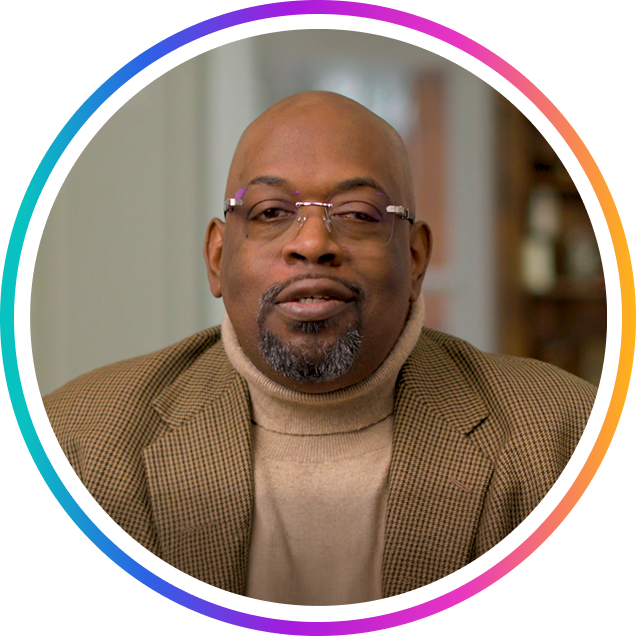
Michael was well into his career as a paramedic when the first sign appeared that something was wrong: a small, stubborn floater drifting across his vision as he tried to read.
He lived with diabetes for roughly fifteen years without knowing that it could lead to issues with his eyesight. So, when he was diagnosed with diabetic retinopathy (DR) and learned about the regular injections he would need to treat it, fear overcame him. All Michael could think about was how vision loss might impact his future.

Once treatment began, his new reality set in.
The injection days were the hardest; between the dilation, numbing gel, antiseptic, and temporary haze that followed, Michael routinely lost an entire day of work to these appointments. To meet the demands of being an emergency responder, he adapted as best he could: tinted lenses, sunglasses, and even relying on a Bluetooth earpiece to sharpen his hearing. Still, the standard he held himself to became increasingly challenging to meet. That’s when Michael made the difficult decision to change careers. This shift gave him something he hadn’t had in years: the flexibility to prioritize his health and ongoing care. Fortunately for Michael, he would no longer have to force his treatments into a demanding work schedule.
As he settled into a long-term treatment routine with his retina specialist, Michael found comfort in understanding every step of the process. Breaking the regimen down – dilation, pressure check, imaging, exam, and treatment – made it feel more manageable. This clarity helped him grow into an advocate for himself and others.
Michael learned as much as he could so that the appointments became conversations. Being informed meant he could explain what he was feeling, ask better questions, and participate actively in decisions about his care. Over time, he also came to understand the importance of regular eye exams and early intervention. Looking back, he recognizes how early detection could have helped him.
Whenever he meets someone newly diagnosed with DR, he shares: “You’re not alone. There are hundreds of thousands of people who have what you have in some form, and they’re still able to live productive lives. Learn as much as you can, so when you sit down with your doctor, there’s dialogue, and you become more of a contributor to your care.”